Engineering the Future
Impact
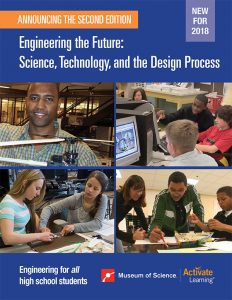
Engineering the Future (EtF) offers an inspiring first-hand look at how real life engineers approach everyday engineering problems through hands-on activities that support student engagement. Studies show that EtF boosts students’ knowledge of and interest in engineering, helps students put engineering concepts into practice, and enhances teachers’ abilities to teach engineering principles.
Accomplished
- Need Accomplished
- Evaluation Developing
- Sustainability Developing
- Replication & Scalability Accomplished
- Partnerships Accomplished
- Capacity Accomplished
- Challenging & Relevant Content Accomplished
- STEM Practices Accomplished
- Inspiration Accomplished
- Under-Represented Groups Accomplished
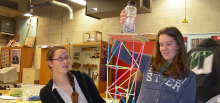
Engineering the Future is the most life-like engineering course I’ve ever taught. It’s real engineering. The students used lathes, plastic welders and saws in constructing organizers. We designed and built forms for a concrete I-beam. One girl suddenly realized all the planning and work involved when she did it herself.
High school teacher, Agawam, MA
Design Principles
The programs in this database clear a high bar. STEMworks reviewed each program against the Design Principles for Effective STEM Philanthropy. Programs must be Accomplished ( ) across all Design Principles, or be Developing (
 ) in a maximum of three areas.
Overarching Principles
-
Need Accomplished
Identify and target a compelling and well-defined need.
-
Evaluation Developing
Use rigorous evaluation to continuously measure and inform progress towards the compelling need identified.
-
Sustainability Developing
Ensure work is sustainable.
-
Replication & Scalability Accomplished
Demonstrate replicability and scalability.
-
Partnerships Accomplished
Create high impact partnerships.
-
Capacity Accomplished
Ensure organizational capacity to achieve goals.
STEM Principles
-
Challenging & Relevant Content Accomplished
Offer challenging and relevant STEM content for the target audience.
-
STEM Practices Accomplished
Incorporate and encourage STEM practices.
-
Inspiration Accomplished
Inspire interest and engagement in STEM.
-
Under-Represented Groups Accomplished
Identify and address the needs of under-represented groups.
Program Overview
Engineering the Future: Science, Technology, and the Design Process (EtF) is a full-year ninth-grade course designed to introduce students to the world of technology and engineering as a first step in becoming technologically literate citizens. Etf helps today’s high school students understand the ways in which they will engineer the world of the future — whether or not they choose to pursue technical careers. The program provides students with opportunities to see science, mathematics, and engineering as part of their everyday lives and to value scientific and technological literacy. EtF is an adaptable, affordable, standards-based modular STEM curriculum. It employs a series of engineering design challenges which seek solutions to inquiry-based problems via need-to-know discovery learning. Student teams apply mathematics and science through sequential tasks in four distinct, engaging, term-length projects. Teacher professional development is provided by the developer and publisher in face-to-face workshops, a four-week moderated online course, and customized sessions.
Funders and Partners
Museum of Science, Boston; National Center for Technological Literacy; Lockheed Martin; Cisco Systems, Inc.; Key Curriculum Press; National Institute of Standards; U.S. Small Business Administration; Massachusetts Technology Collaborative Renewable Energy Trust; The Highland Street Foundation; It’s About Time publishing