Science in Motion
Impact
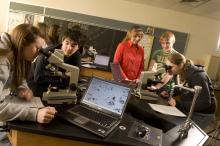
Science In Motion (SIM) brought excellent hands-on, inquiry-based science experiences to many thousands of students in Pennsylvania in 2013, and these students tend to outperform their peers in standard tests of science. With enough support, SIM’s visiting educators could make 58,000 visits to classrooms next year, and even more in in following years.

Accomplished
- Need Accomplished
- Evaluation Developing
- Sustainability Developing
- Replication & Scalability Accomplished
- Partnerships Accomplished
- Capacity Accomplished
- Challenging & Relevant Content Accomplished
- STEM Practices Accomplished
- Inspiration Accomplished
- Under-Represented Groups Developing
As an engineering and design firm in Huntingdon, PA, it has become increasingly difficult to find local career applicants with the high tech skills necessary to fulfill our current requirements. Science-In-Motion, as operated at Juniata College, has made a significant impact in creating student interest in Science, Technology, Engineering and Math as a course of further study and as a career path. We are proud to support Science in Motion in their valuable work.”
Sales & Marketing Manager, John R. Wald Co.
Design Principles
The programs in this database clear a high bar. STEMworks reviewed each program against the Design Principles for Effective STEM Philanthropy. Programs must be Accomplished ( ) across all Design Principles, or be Developing (
 ) in a maximum of three areas.
Overarching Principles
-
Need Accomplished
Identify and target a compelling and well-defined need.
-
Evaluation Developing
Use rigorous evaluation to continuously measure and inform progress towards the compelling need identified.
-
Sustainability Developing
Ensure work is sustainable.
-
Replication & Scalability Accomplished
Demonstrate replicability and scalability.
-
Partnerships Accomplished
Create high impact partnerships.
-
Capacity Accomplished
Ensure organizational capacity to achieve goals.
STEM Principles
-
Challenging & Relevant Content Accomplished
Offer challenging and relevant STEM content for the target audience.
-
STEM Practices Accomplished
Incorporate and encourage STEM practices.
-
Inspiration Accomplished
Inspire interest and engagement in STEM.
-
Under-Represented Groups Developing
Identify and address the needs of under-represented groups.
Program Overview
SIM is a consortium of 12 colleges and universities that provides high-tech laboratory experiments to many school districts in the Commonwealth of Pennsylvania. The program aims to address the needs of science, engineering, and technology programs in high- and middle-school classrooms by providing support to the schools. This support includes: * Delivering modern scientific equipment and consumables to allow every student hands-on experience with science * Providing visiting educators who team-teach high-tech science labs with school faculty * Presenting professional development workshops to keep teachers abreast of recent developments in science and help them transfer that knowledge to the classroom and * Offering state and national standards-aligned laboratory activities for students of all backgrounds and abilities. SIM aims to reduce costs through its shared-resources partnerships between public and private secondary schools and higher education. Schools have access to multiple sets of equipment that they could otherwise never afford. The host colleges and universities provide administrative support to the program, laboratory space for preparation of experiments, access to chemical ordering, safety equipment, and disposal services. In return, SIM provides its partner higher education institutions with undergraduate and graduate work opportunities for post-secondary students and teaching opportunities for students who are studying education. These symbiotic relationships between secondary- and higher-education institutions aim to improve the education of students at both levels.
Funders and Partners
The Commonwealth of Pennsylvania (funder) and the Pennsylvania Department of Education (partner)